E-Lecture - Photosynthesis
Photosynthesis the process by which green plants and certain other organisms transform light energy into chemical energy. During photosynthesis in green plants, light energy is captured and used to convert water and carbon dioxide, into oxygen and energy-rich organic compounds. Photosynthesis takes place inside plant cells in small organelles called chloroplasts. Chloroplasts contain a green substance called chlorophyll. This absorbs sun light needed for photosynthesis. Plants and algae can only carry out photosynthesis in the light.
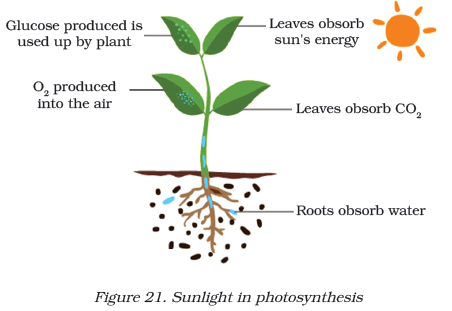
Plants get carbon dioxide from the air through their leaves, and water from the ground through their roots. Light energy comes from the sun. The oxygen produced during photsynthesis is released into the air from the leaves. The glucose produced can be turned into other substances, such as starch and plant oils, which are used as an energy store. This energy can be released by respiration.
Conditions for Photosynthesis
Below are things that plants need for photosynthesis:
Water: Plants absorb water from the soil through their roots. The water is transported to all cells in the plants. Excess water is released through pores called stomata found in plant’s leaves. When the air around the plant becomes saturated with water, the humidity rises. This prevents water vapor from evaporating from the stomata and water from being drawn up from the roots. This can cause a water deficit in the plant, causing the plant to close its stomata. With the stomata closed, carbon dioxide is blocked from entering the plant, slowing photosynthesis
Light: Plants get the energy they need for photosynthesis from light. Plants use only some of the wavelengths of light in sunlight to support the light-dependent reactions of photosynthesis.
Too little light, too much light, or the wrong kind of light, will affect photsynthesis in plants.
Chlorophyll: This is the green pigment found in the leaves of plants. Nutrients and minerals: Chemicals and organic compounds are absorbed from the soil by plant roots.
Glucose and oxygen are the products of photosynthesis.
Carbon dioxide + water (+light energy) → glucose + oxygen
6CO2 + 6H2O (+Light energy) C6H12O6 + 6O2
Temperature: Temperature, including air temperature and soil temperature, affects most processes of plant growth, photosynthesis, water intake, nutrient intake, and cell division. High temperatures can interfere with photosynthesis by causing the enzymes that regulate the process to “unravel.” Cold temperatures can damage plant roots and even cause the plant to die. At temperatures below 7°C (about 45°F), the roots of a plant cannot take up water and nutrients.
Carbon Dioxide: Plants need carbon dioxide for photosynthesis. They take carbon dioxide in from the atmosphere through tiny holes in their leaves. But the increase in carbon dioxide could cause the temperature to rise to a point that is damaging to some plants.
Plants get CO2 from the air through their leaves and water from the ground through their roots. Light energy comes from the sun.
The oxygen produced is released into the air from the leaves. The glucose produced can be turned into other substances, such as starch, used as a store of energy. This energy can be released by respiration.
 Browse Chapter